2005 年 812 日 (No.210)


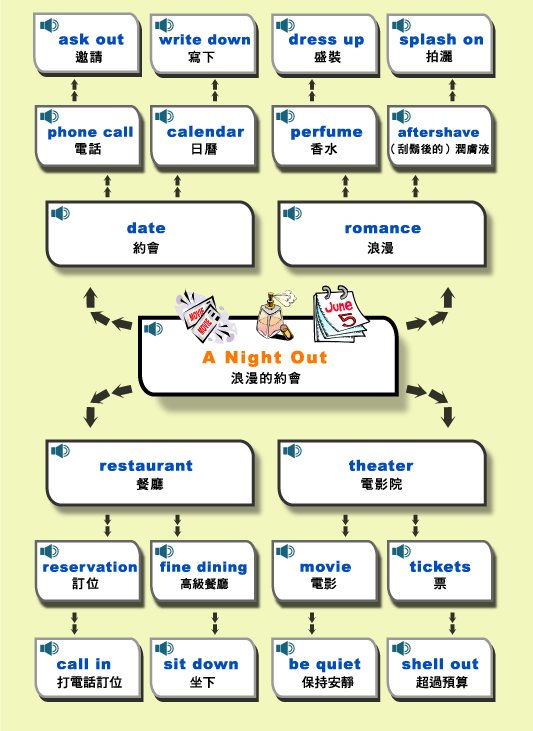
A Night Out 開始的聯想,幫助你學習更多新單字喔!

  vacationvocation 有什麼不同?下列的解釋和例句跟你說明白。
   
Your vacation is your holiday or time off work. Most vacations involve going
  away on a short trip as an escape from the routine of everyday life. "Vacation"
  can also be used as a verb. Your "vocation" is your "calling" in life. It is the
  thing that you feel most passionate about: your career or chosen profession.
  See the examples below.
  vacation 是指你的假日或休假,大部分的假期包括去一趟短期的旅遊,遠離一成不變的生活。
  此外,vacation 也可以當動詞。vocation 指的是職業,你最有熱情參與的事,你的生涯職志或
  你的專業。來看下面的例子:
   
This year Steve and Sandy will spend their vacation on a beach in Mexico.
  史提夫和珊蒂今年會去墨西哥的海邊度假。
   
Angie felt that her true vocation was as a nurse, helping sick people.
  安琪覺得她最想做的職業是當一個護士,幫助生病的人。
   
Tammy can't afford to take a vacation this summer because she is going away
  at Christmas.
  譚美今年夏天沒錢去度假,因為她聖誕節要出去玩。
   
Melody felt that teaching children was not just a job, but a vocation.
  美樂蒂認為教小朋友不只是一份工作,更是一份職志。
   
Carol and Mike decided to vacation at home, fixing up their new house.
  卡蘿和麥克決定在家度過假期,裝修他們的新房子。
   

would've 的念法聽起來像 would of,小心別寫錯了!  
     
When listening to dialogues or any recorded material, "would've" sounds  
  like "would of", when it is really the contraction of "would have". This  
  mistake often shows up even in the writing of native English speakers, in  
  casual communication such as e-mails. Take care not to fall into the trap  
  of just writing what the words sound like; make sure they make sense.  
  對話或錄音中會把 would've 唸成像 would of 的音,實際上應該是 would have 的縮寫。  
  這種錯誤甚至常發生在母語是英語者寫作的時候,例如一般的溝通或電子郵件。在寫作時  
  要小心這個字的發音,確定句子是有意義的。  
     
I'm sorry I missed your birthday. I would've called earlier, but my phone  
  wasn't working.  
  很抱歉錯過你的生日,我本想先打電話,可是我的電話壞了。  
     
If Ted had seen the weather report, he would have known to bring an  
  umbrella.  
  如果泰德先看過氣象報告,他就會知道要帶把傘。  
     
I would of bought tickets to the Rolling Stones concert if I had known they  
  were coming to town. (X)  
  如果我早知道滾石合唱團會來城裡,我就會去買演唱會的票了。(拼法錯誤)


  Idiom:
the salt of the earth
  真誠正直的人
   
Origin:
"You are the salt of the earth."
 
Matthew 5:13
  出處:
  你們是世上的鹽。
 
馬太福音 5 章 13 節
 
Explanation:
This idiom is a metaphor used to describe appreciation of or admiration for
  someone. It means that they are real and honest and good.
  解釋:
  這個諺語是一個隱喻,用來形容很讚賞或欣賞某個人,意指那些人真誠、正直又好心。
 
Dialogue:
Teresa:
 Your husband seems like a very nice man.
     你先生看起來是個很好的人。
Carol:
 Oh yes. He's the salt of the earth. He is very good to me and the kids.
     是的,他很真誠又正直。他對我和小孩都非常好。